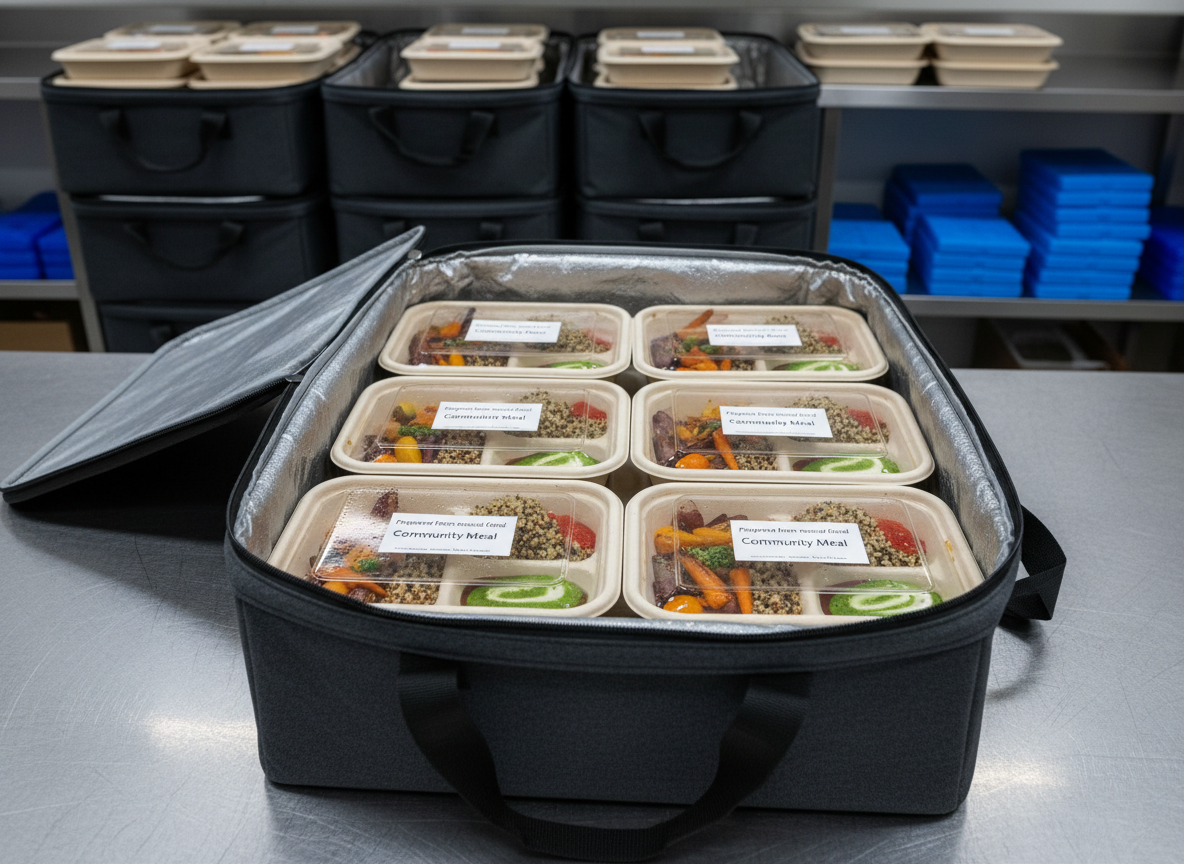
An insulated, reusable food delivery container opened on a clean stainless-steel counter, revealing multiple neatly packed, eco-friendly meal boxes made from unbleached, compostable material. Inside each box, balanced portions of a colorful surplus-food-based meal—roasted vegetables, grains, and sauces—are carefully separated in compartments, looking fresh and appetizing. Behind the container, shelves stocked with more labeled delivery crates and reusable ice packs create depth, softly out of focus. Cool, bright fluorescent lighting provides even illumination with subtle reflections on the metal counter, reinforcing a professional, food-safe environment. Photographic realism captures fine details like condensation on lids and printed labels indicating “Prepared from rescued food.” The composition uses an eye-level perspective and centered framing to highlight efficient, dignified distribution of meals to the community.

About Waste2Taste

Learn how we turn everyday surplus into equitable meals, powered by community partnerships.

About

Turning Waste into Shared Meals

Waste2Taste rescues surplus food and lovingly transforms it into nutritious, low-cost meals for our community. By partnering with local growers, retailers, and volunteers, we cut waste and hunger together—discover how it works on Our Model.
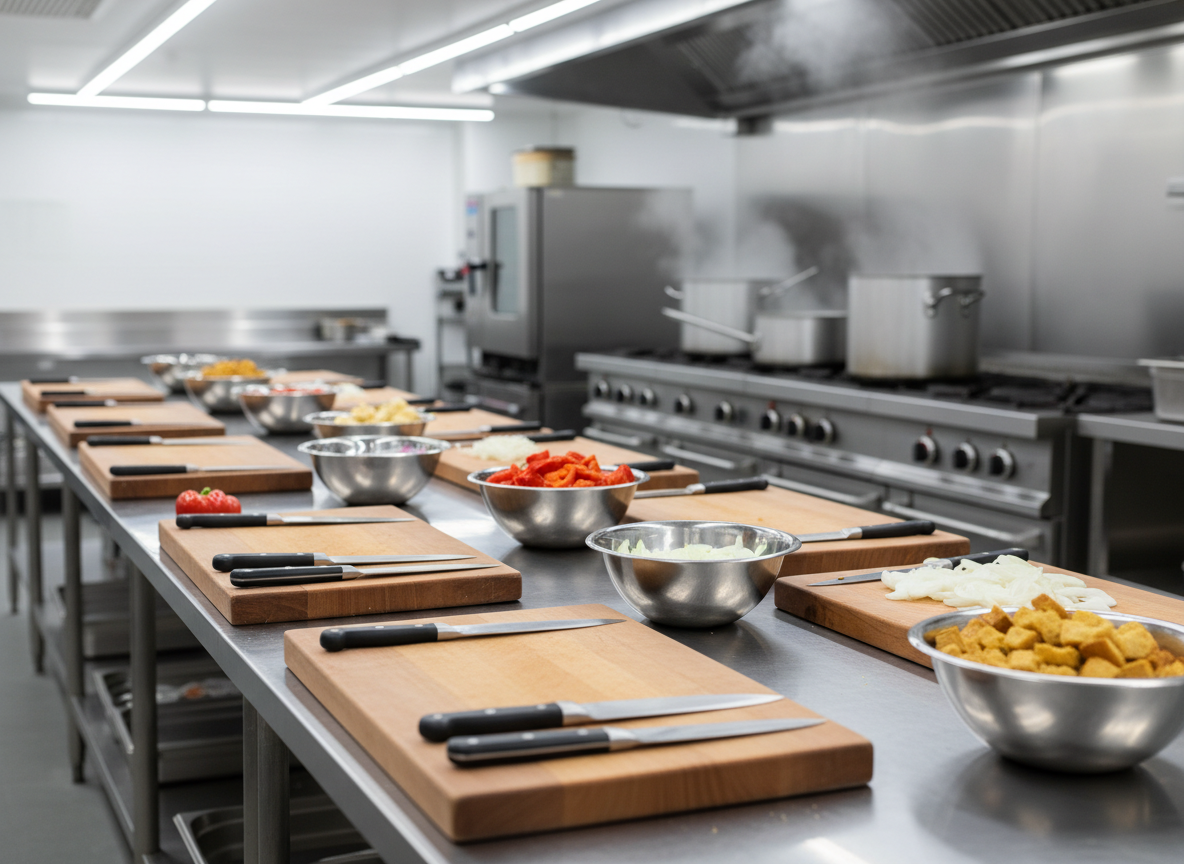
A polished stainless-steel prep table in a commercial-grade community kitchen, lined with neatly arranged chopping boards, sharp chef’s knives, and bowls filled with chopped surplus vegetables—vibrant red peppers, sliced onions, and diced bread for croutons. In the background, simmering pots on an industrial stove emit gentle steam, softly blurred to maintain focus on the prep area. Bright, evenly distributed overhead lighting illuminates every surface, creating crisp reflections and a clean, professional atmosphere. Captured from a slightly elevated angle with sharp focus across the frame, the photographic realism emphasizes hygiene, organization, and efficiency. The mood is purposeful and optimistic, showcasing how excess ingredients are systematically transformed into nutritious community meals rather than being discarded.

Our People

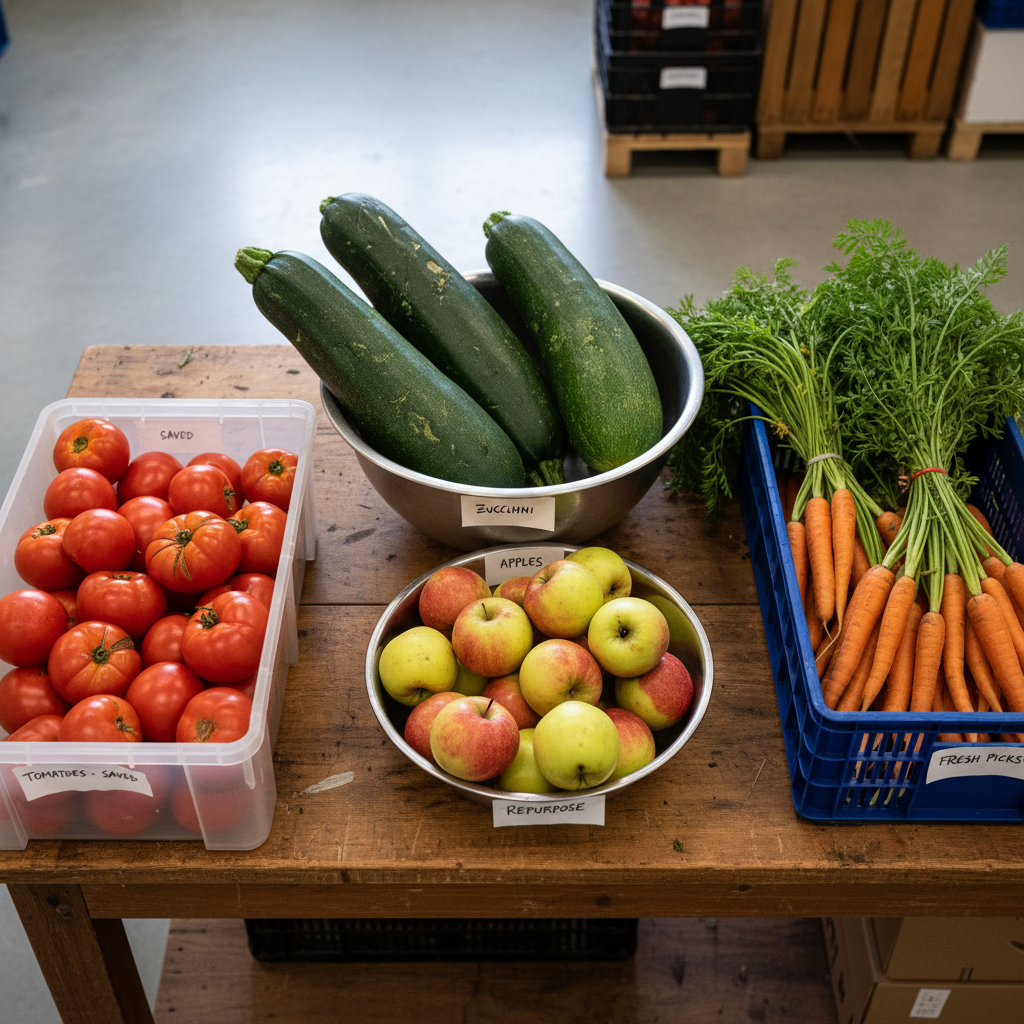
A close-up, overhead photographic view of a sturdy wooden sorting table covered with carefully arranged surplus produce: slightly misshapen tomatoes, oversized zucchinis, speckled apples, and imperfect but fresh carrots. Each group of vegetables rests in labeled, reusable plastic crates and metal bowls, creating a sense of order and intention. Soft, diffused daylight from an unseen high window washes over the scene, reducing harsh shadows and highlighting natural textures and subtle blemishes. The background fades into a gentle blur of stacked crates and a clean concrete floor. The composition follows the rule of thirds, with strong geometric shapes and natural colors, conveying a professional, methodical approach to reducing food waste through careful selection and preparation.

Aarav Sharma

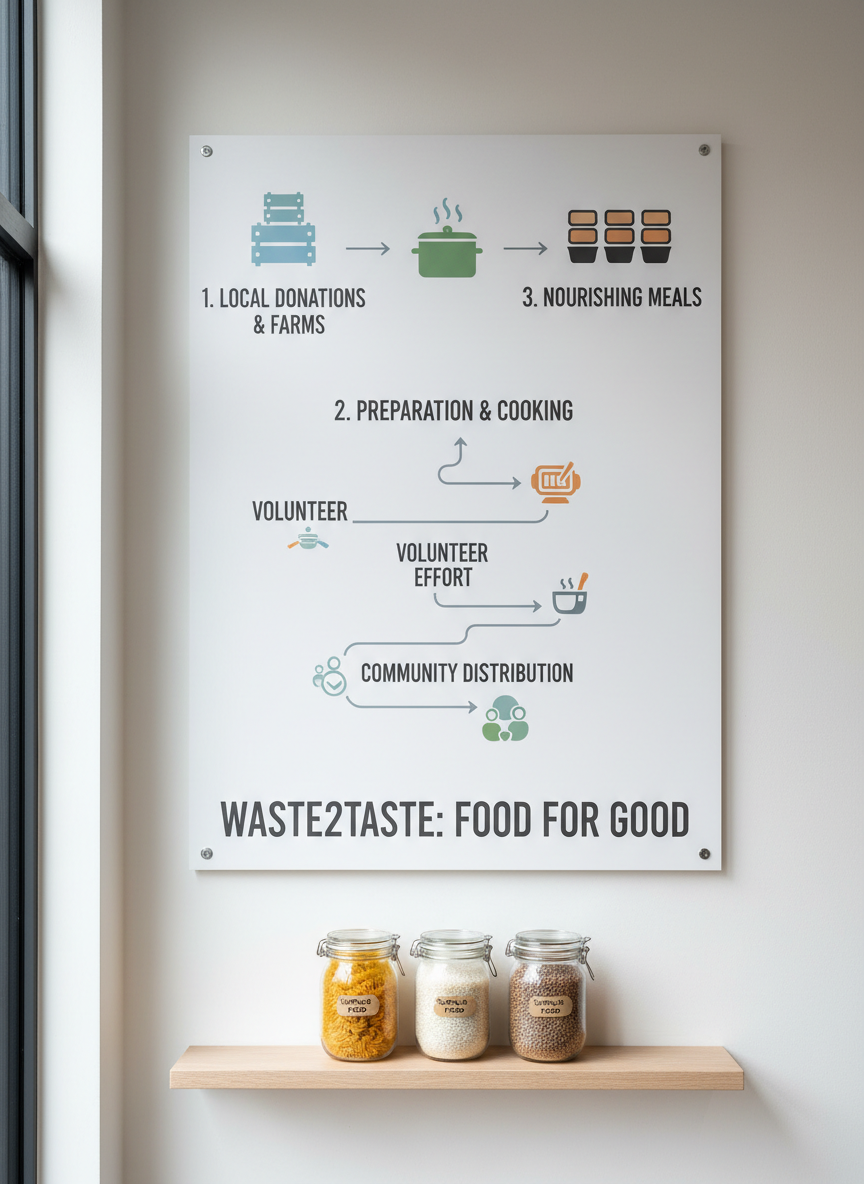
A large, wall-mounted infographic-style display in a modern community food hub, showing a clear, visual journey of surplus food from donation to finished meals. Stylized icons of crates, cooking pots, and meal boxes are printed in clean, flat colors on a matte white board, with bold professional typography explaining each step. Below the display, a narrow wooden shelf holds glass jars filled with pasta, rice, and lentils that would otherwise go to waste. Soft, diffused natural light from a nearby window gently illuminates the board without glare, enhancing legibility. Photographed head-on with precise alignment and sharp focus, the image has a clean, modern, educational feel, supporting the mission of Waste2Taste by clearly communicating impact without clutter or distraction.

Mateo García

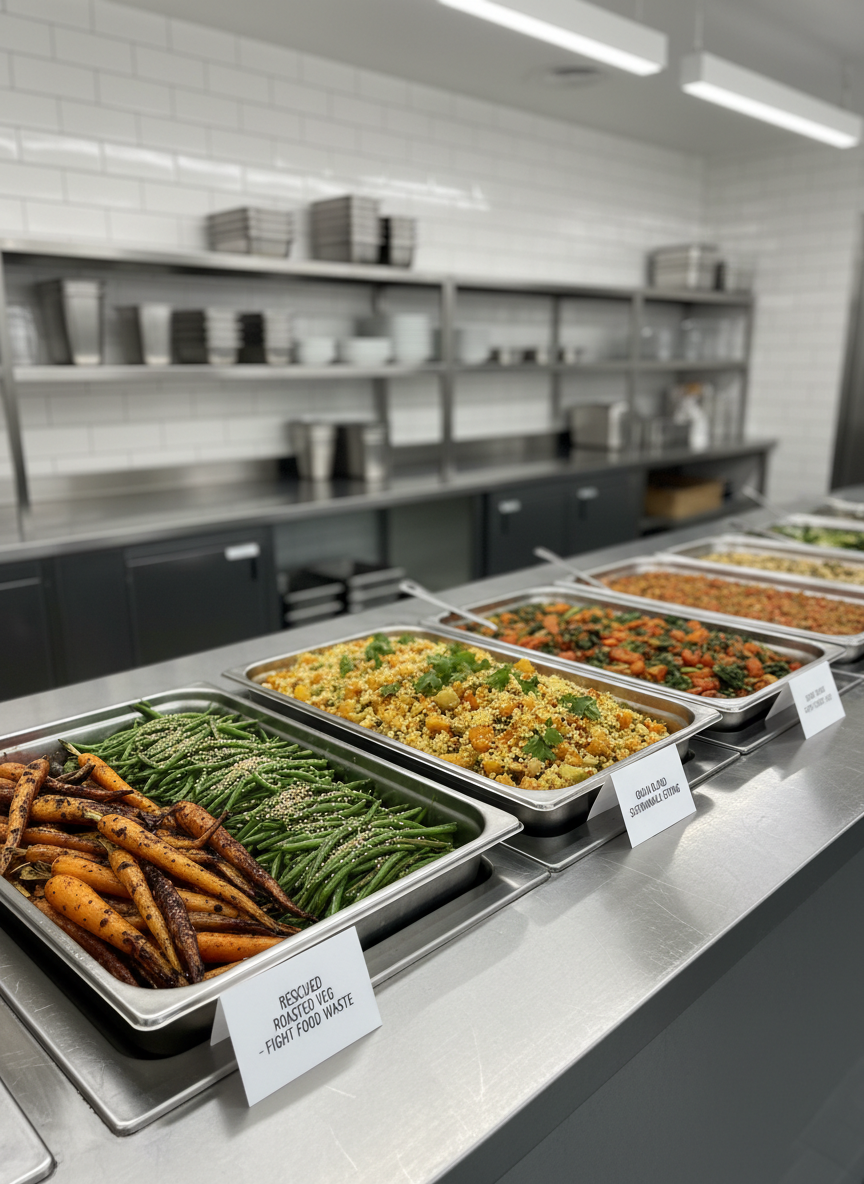
A long stainless-steel serving counter neatly arranged with deep trays of colorful surplus vegetables and grains, carefully transformed into elegant buffet-style dishes. Perfectly roasted carrots, glossy green beans, and golden couscous sit in pristine metal pans, each labeled with simple, professional signage about reducing food waste. The counter stands in a spotless, contemporary community kitchen with white tiled walls and neatly stacked reusable containers in the background, softly blurred. Overhead, cool white LED lighting creates even, photographic realism with gentle reflections on the metal surfaces. Shot at eye level with a slight three-quarter angle, the composition feels organized, calm, and professional, emphasizing abundance with purpose and the transformation of rescued food into dignified community meals.

Zuri Ndlovu

An insulated, reusable food delivery container opened on a clean stainless-steel counter, revealing multiple neatly packed, eco-friendly meal boxes made from unbleached, compostable material. Inside each box, balanced portions of a colorful surplus-food-based meal—roasted vegetables, grains, and sauces—are carefully separated in compartments, looking fresh and appetizing. Behind the container, shelves stocked with more labeled delivery crates and reusable ice packs create depth, softly out of focus. Cool, bright fluorescent lighting provides even illumination with subtle reflections on the metal counter, reinforcing a professional, food-safe environment. Photographic realism captures fine details like condensation on lids and printed labels indicating “Prepared from rescued food.” The composition uses an eye-level perspective and centered framing to highlight efficient, dignified distribution of meals to the community.

Leila Haddad

A polished stainless-steel prep table in a commercial-grade community kitchen, lined with neatly arranged chopping boards, sharp chef’s knives, and bowls filled with chopped surplus vegetables—vibrant red peppers, sliced onions, and diced bread for croutons. In the background, simmering pots on an industrial stove emit gentle steam, softly blurred to maintain focus on the prep area. Bright, evenly distributed overhead lighting illuminates every surface, creating crisp reflections and a clean, professional atmosphere. Captured from a slightly elevated angle with sharp focus across the frame, the photographic realism emphasizes hygiene, organization, and efficiency. The mood is purposeful and optimistic, showcasing how excess ingredients are systematically transformed into nutritious community meals rather than being discarded.
A close-up, overhead photographic view of a sturdy wooden sorting table covered with carefully arranged surplus produce: slightly misshapen tomatoes, oversized zucchinis, speckled apples, and imperfect but fresh carrots. Each group of vegetables rests in labeled, reusable plastic crates and metal bowls, creating a sense of order and intention. Soft, diffused daylight from an unseen high window washes over the scene, reducing harsh shadows and highlighting natural textures and subtle blemishes. The background fades into a gentle blur of stacked crates and a clean concrete floor. The composition follows the rule of thirds, with strong geometric shapes and natural colors, conveying a professional, methodical approach to reducing food waste through careful selection and preparation.
A large, wall-mounted infographic-style display in a modern community food hub, showing a clear, visual journey of surplus food from donation to finished meals. Stylized icons of crates, cooking pots, and meal boxes are printed in clean, flat colors on a matte white board, with bold professional typography explaining each step. Below the display, a narrow wooden shelf holds glass jars filled with pasta, rice, and lentils that would otherwise go to waste. Soft, diffused natural light from a nearby window gently illuminates the board without glare, enhancing legibility. Photographed head-on with precise alignment and sharp focus, the image has a clean, modern, educational feel, supporting the mission of Waste2Taste by clearly communicating impact without clutter or distraction.